Since 2021, Kif offers a streamlined platform to get a medical marijuana card online. We have served more than 45K patients across the United States. Sign Up Now to get the right to use medical cannabis for your health condition without any delay.








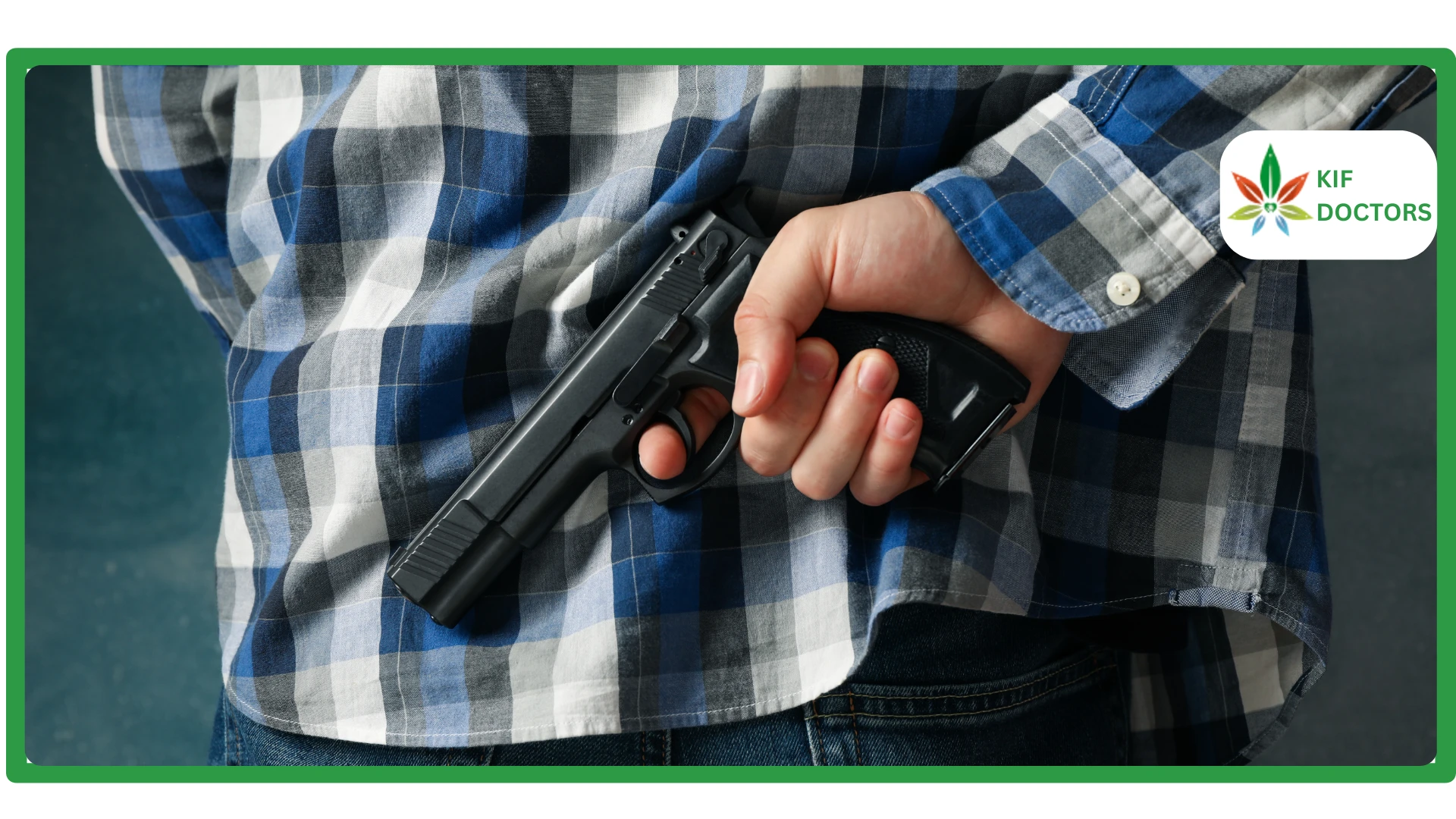

Living in California means you have access to medical cannabis to help with your health. But what if you also want to own a gun? This is where things get tricky. The big question many people ask is about gun ownership for MMJ patients in California.
It feels like you should be able to do both. You want to follow your doctor’s advice for your health, and you also believe in your right to own a firearm. However, the laws about this are confusing. Even though California says yes to medical cannabis, the U.S. government has different rules.
This guide will help you understand the problem. We will look at what California law says and what federal law says. Knowing the rules is the first step to making a safe and legal choice for yourself.
Federal Law vs. California State Law
The main issue comes from a big disagreement between California's rules and the U.S. government's rules. They don't see eye to eye on cannabis. This creates a tough spot for people who use medical marijuana and also want to own guns.
California's Stance
In California, the law is pretty forward-thinking. The state was the first to legalize medical cannabis. However, California law doesn't have a specific rule that says you can't own a gun just because you have a medical marijuana card.
The state has made it clear that using cannabis for health is okay. So, if you only look at California's rules, it seems like there shouldn't be a problem. But unfortunately, state law is not the only law you have to follow.
The Federal Hurdle
Here is where the big problem starts. The U.S. government, or the federal government, has its own set of laws. According to federal law, marijuana is still a "Schedule I controlled substance." This is a fancy way of saying the government thinks it's a dangerous drug with no medical use.
Because of this, federal law says that anyone who is an "unlawful user of... any controlled substance" cannot legally own or buy a gun. Since the federal government considers all marijuana use "unlawful," this rule applies to everyone, including medical patients in California. This is the most important part of the puzzle.
The Deciding Factor: ATF Form 4473
If you've ever tried to buy a gun from a licensed dealer, you've seen ATF Form 4473. This piece of paper is a real-world example of how the federal ban works. It’s a form from the Bureau of Alcohol, Tobacco, Firearms and Explosives (ATF).
This form is a background check, and you must fill it out to buy a gun. There is one question on this form that creates a big problem for cannabis users. Question 21.g. asks:
"Are you an unlawful user of, or addicted to, marijuana or any depressant, stimulant, narcotic drug, or any other controlled substance?"
This question puts medical marijuana patients in a very tight spot. If you answer "no," you are lying on a federal form, which is a serious crime called perjury. But if you answer "yes," you will be denied the gun purchase right away.
From the federal government's point of view, any use of cannabis makes you an "unlawful user." It doesn't matter what California law says. Understanding these legal details can be as tricky as figuring out the right medical cannabis for your conditions, which is why getting clear information is so important.
Can You Get Around the Law? Common Questions Answered
Many people have questions about "what if" situations. They want to know if there are any loopholes or exceptions. Let's look at some of the most common questions.
What if I bought the gun before getting my MMJ card?
Some people think they can get around the law by buying a gun first. They believe that if they truthfully say "no" on the ATF form before they get a medical card, they are safe. But this is not true.
The federal law is about both buying and possessing a gun. So, the moment you become a medical cannabis user, the federal government considers you an "unlawful user." This means you are no longer allowed to own the gun you already have.
Does this apply to recreational users too?
Yes, it does. The federal law doesn't see a difference between medical and recreational use. Since cannabis is a Schedule I substance, any use is considered illegal by the U.S. government.
So, whether you have a medical card or just buy cannabis from a dispensary for fun, the rule is the same. Federal law says you cannot own a gun.
What about my spouse or family members?
The law applies to the person who is using cannabis. This means your spouse or another family member can legally own a gun, even if you have a medical card.
However, you must be very careful. If you have access to their firearm, it could lead to serious legal trouble for both of you. The best advice is for the gun owner to keep the firearm securely locked away where the cannabis user cannot get to it.
Note: Figuring out the world of medical cannabis can feel complicated, but getting your evaluation should be simple. The Kif provides a safe and easy way to talk with our licensed Kif's Doctors and get your medical marijuana card recommendation online, often with instant approval. We've helped over 450,000 patients across the country, making the first step in your health journey easy and private. Take a look at our clear pricing options and sign up today to see if you qualify.
Legal Precedent: What the Courts Say
This issue is so important that it has been tested in court. This helps us understand how the law is applied in real life. It shows that this isn't just a rule on paper; it's a rule that is enforced.
A key case was Wilson v. Lynch in 2016. The Ninth Circuit Court of Appeals, which covers California, looked at this exact problem. The court decided that stopping medical marijuana cardholders from buying guns does not violate their Second Amendment rights.
This court ruling confirmed the federal government's position. It showed that, for now, the law has been challenged and has held up. This makes the situation very clear: under current law, you cannot legally use medical cannabis and own a gun.
The Path Forward: Steps for California MMJ Patients
Given the conflict between state and federal law, what should a person do? It’s a tough situation, but there are clear steps you can take to stay safe and on the right side of the law. Here is some simple advice.
1. Understand the Risk
First, you must understand the serious legal risk you take if you choose to have both a gun and a medical marijuana card. You could face federal charges, which can lead to prison time and large fines. It's not a risk to be taken lightly.
2. Choose One or the Other
As things stand today, you must make a choice. You can either use medical cannabis to treat your health condition, or you can own a firearm. Under federal law, you simply cannot do both at the same time.
3. Stay Informed
Laws can and do change over time. There is a lot of talk about changing federal cannabis laws, and this could affect gun rights in the future. Keep up with the news and follow updates from trusted legal sources.
4. Consult a Legal Professional
This article is for informational purposes only and is not legal advice. If you are in this situation, the best thing you can do is talk to a lawyer. Find an attorney who knows about both cannabis law and firearm law to get advice for your specific case.
Conclusion: A Difficult Choice for California Patients
In the end, the issue of gun ownership for MMJ patients in California remains a frustrating legal gray area. Your state says it's okay to use cannabis for your health, but the federal government says doing so takes away your right to own a gun. This puts many responsible, law-abiding citizens in an impossible position.
For now, the federal rule is the one that matters most when it comes to buying and owning firearms. The law forces you to choose between your health and your Second Amendment rights. We hope that one day, the laws will change to better align and remove this difficult choice for patients across the country.